
Dental Care for Children with Heart Conditions: What Every Parent Should Know
Dental Care for Children with Heart Conditions: What Every Parent Should Know
Oral health is an integral part of overall well-being, and for children with heart conditions, maintaining proper dental care is particularly crucial. The mouth can serve as a gateway for bacteria, which, if left unchecked, may enter the bloodstream and affect the heart. Pediatric dental specialists emphasize that early, consistent dental care not only protects teeth and gums but also supports cardiovascular health, making preventive care an essential part of a child’s routine.
Many parents ask: When should my child start visiting the dentist? How can I ensure their dental care is safe, given their heart condition? What precautions should I take during dental procedures? Understanding these questions and taking proactive steps ensures children remain healthy, confident, and comfortable with dental care from an early age.
The Connection Between Heart Health and Oral Care
Children with congenital or acquired heart conditions are more susceptible to infections originating from the mouth. Untreated cavities, gum inflammation, or bacterial buildup can lead to serious complications such as infective endocarditis. Pediatric dental specialists stress that maintaining oral hygiene through professional visits and at-home care is one of the most effective strategies to reduce these risks.
Research shows that children who begin dental care early and follow consistent preventive routines are less likely to experience complications related to heart conditions. This highlights the vital role of pediatric dentists in coordinating care with cardiologists to create safe, individualized treatment plans.
Why Early Pediatric Dental Care Matters
Starting dental care early sets the stage for a lifetime of healthy habits and reduces potential health risks. Early evaluations help detect cavities, monitor jaw and tooth development, and identify conditions that could complicate oral or heart health later. Pediatric dentists can also educate families on proper brushing, flossing, and dietary practices, ensuring that children establish strong foundations for long-term oral health.
Beyond teeth, early dental visits help children develop trust and comfort with healthcare professionals. This reduces anxiety in future appointments, making it easier to address more complex dental needs as children grow.
Key Considerations for Children with Heart Conditions
- Preventing Infections: Children with heart conditions are more vulnerable to systemic infections originating in the mouth. Professional cleanings and monitoring help prevent bacteria from entering the bloodstream.
- Medication Impacts: Certain medications can affect oral health, causing dry mouth, gum overgrowth, or enamel changes. Pediatric dentists provide guidance on managing these side effects.
- Safe Procedures: Dental treatments may require special precautions, including antibiotic prophylaxis or modified techniques to ensure safety. Collaboration with a child’s cardiologist is crucial.
- Early Detection: Routine check-ups allow dentists to identify cavities, misalignment, or gum issues early, reducing the need for invasive procedures later.
Common Dental Challenges
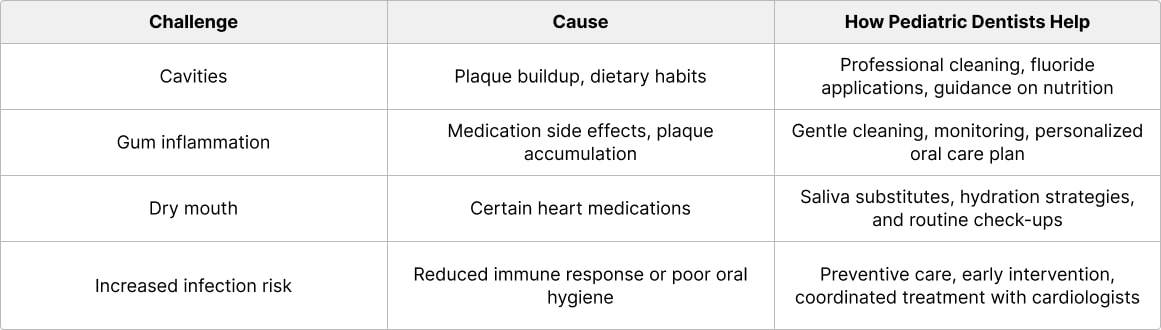
By addressing these challenges early, pediatric dental care helps reduce complications and promotes better overall health outcomes.
Home Care and Daily Practices
At-home oral care is just as critical as professional visits. Pediatric dental specialists recommend establishing routines that reinforce healthy habits while reducing risks associated with heart conditions:
- Brush teeth twice daily using a soft-bristled toothbrush, ensuring that children reach all surfaces.
- Floss gently once a day to remove plaque and food particles between teeth.
- Limit sugary and acidic foods to protect enamel and prevent cavities.
- Encourage regular hydration to combat dry mouth caused by certain medications.
- Monitor gums and teeth for signs of swelling, redness, or unusual sores, and report concerns promptly to a pediatric dentist.
How Dental Care Supports Overall Health
What to Expect During Pediatric Dental Visits
Pediatric dental visits for children with heart conditions are carefully structured to ensure safety, comfort, and a preventive focus. A typical visit may include:
- Comprehensive Examination: Assessment of teeth, gums, bite, and oral structures, with attention to any cardiac considerations.
- Preventive Treatments: Fluoride applications, dental sealants, and professional cleanings to reduce decay and infection risk.
- Health Coordination: Collaboration with cardiologists to determine if antibiotic prophylaxis or modified procedures are necessary.
- Parental Guidance: Education on home care routines, dietary strategies, and signs of potential complications.
- Monitoring Growth and Development: Tracking tooth eruption, jaw alignment, and oral health progression to anticipate future needs.
Debunking Common Myths
- Myth: Children with heart conditions should avoid dental care because it’s risky.
Fact: With proper precautions, dental visits are safe and critical for preventing systemic complications. - Myth: Only major procedures require special attention.
Fact: Even routine cleanings and check-ups may need modifications based on the child’s medical history. - Myth: Brushing and flossing alone are enough.
Fact: While essential, home care cannot replace professional monitoring, preventive treatments, and early detection of issues.
Long-Term Benefits of Proactive Pediatric Dental Care
- Reduced risk of oral infections that can affect the heart
- Fewer emergency visits and invasive treatments
- Improved comfort and confidence during dental visits
- Strong, healthy teeth that support nutrition, speech, and overall growth
Investing in pediatric dental care creates a foundation that benefits not only oral health but overall well-being, allowing children to thrive physically and emotionally.
Choosing the Right Pediatric Dental Provider
Selecting an experienced pediatric dentist is vital for children with heart conditions. Key considerations include:
- Experience in caring for medically complex children
- Coordination with cardiologists for safe, individualized treatment
- Child-friendly environment that prioritizes comfort and understanding
- Emphasis on preventive care to reduce the need for invasive procedures
Parents should seek providers who combine medical knowledge with compassionate, child-focused care to ensure the best possible outcomes.
Building a Lifetime of Healthy Habits
Early pediatric dental care for children with heart conditions is more than routine check-ups; it is an investment in lifelong health. By integrating professional care, daily home practices, and collaboration with healthcare providers, parents can minimize risks, promote healthy oral and cardiac outcomes, and help children develop positive attitudes toward dental care that last a lifetime.
Frequently Asked Questions
1. Why is dental care especially important for children with heart conditions?
Oral bacteria can enter the bloodstream and increase the risk of heart-related infections, making preventive dental care essential.
2. When should a child with a heart condition first visit the dentist?
3. Are dental procedures safe for children with heart conditions?
Yes. With proper precautions and coordination with a cardiologist, dental treatments are safe and effective.
4. Do children with heart conditions need antibiotics before dental treatment?
5. How often should children with heart conditions visit the dentist?
Dental care plays a crucial role in protecting the overall health of children with heart conditions. Maintaining healthy teeth and gums helps reduce the risk of infections that could impact the heart while supporting proper nutrition, speech, and emotional well-being. Through early intervention, preventive treatments, and close coordination between pediatric dentists and cardiologists, children can receive safe, effective, and stress-free dental care. Consistent home routines combined with professional monitoring create a strong foundation for long-term health and confidence. For families seeking trusted Pediatric dentistry in Clear Lake City, 77062, choosing an experienced pediatric dental provider ensures personalized, compassionate care that supports both oral and heart health throughout childhood.